
You may have seen on our socials that we had a recent conversation all things ‘independent play’ – and the question came up how to support neurodiverse learners on their solo-play journey.
Before sharing my thoughts and some ideas, I just want to acknowledge that every situation and child is unique. Without knowing the child (and specific) situation well, it’s important to remember there’s no one-size-fits-all approach.
Children move through different stages of play at their own pace… from parallel play where they play alongside others, to associative and eventually more independent and imaginative play.
A two-year-old’s “independent play” might look very different from a five-year-old’s, and that’s completely normal. The goal isn’t to push for complete independence right away, but instead to gently nurture a child’s growing confidence to explore, create, and enjoy time in their own company. Small, supportive steps, like offering open-ended materials, creating a safe, inviting play space, and allowing plenty of uninterrupted time, can help lay the foundation for independent play in a way that feels natural and joyful for each unique child.
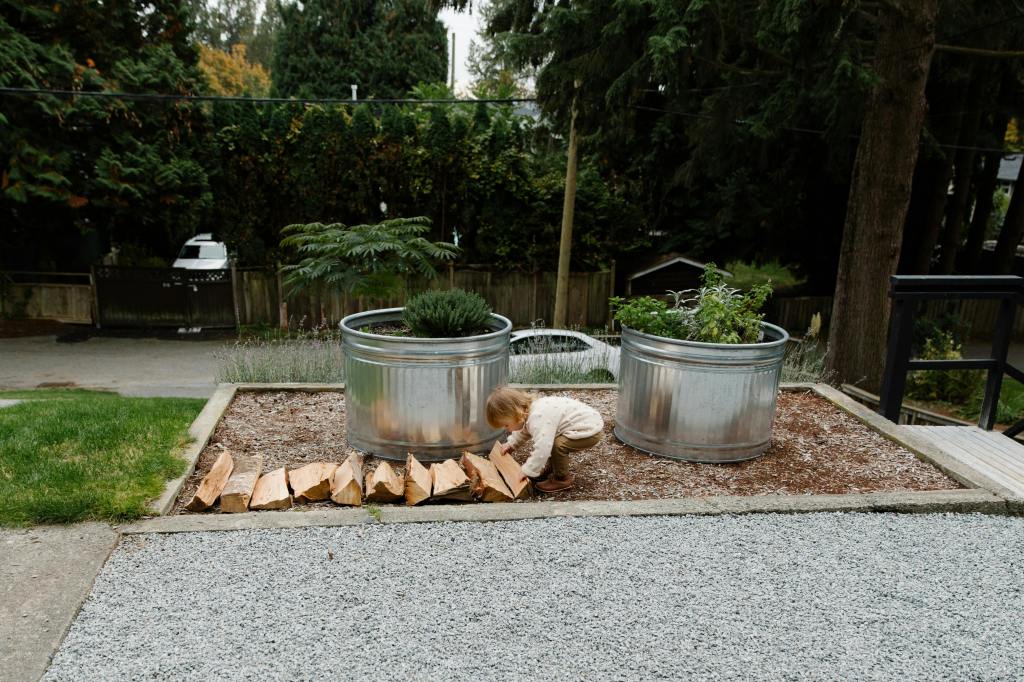
Every child’s profile of strengths, sensitivities and interests is unique, and neurodivergent children (e.g. those on the autism spectrum, with ADHD, sensory processing differences, etc.) often benefit from a few extra supports as they build independent-play skills. Here are some key strategies:
- Use visual supports and routines. Neurodivergent children often find predictability reassuring. Create a simple picture schedule or sequence strip showing “First play independently, then snack,” or “Pick a toy → Play 10 min → [activity that follows].” This supports understanding of what “independent play” looks like and when it ends, without relying solely on verbal instructions.
- Know your child’s sensory needs. Some tamariki seek sensory input (e.g. fidget tools, weighted blankets) while others avoid strong sensations. Offer a small basket of texture-varied loose parts (e.g. soft scarves, smooth stones, foam blocks) so your child can self-select what feels comfortable as they explore solo play.
- Remain physically nearby but “invisible.” Especially at first, stay in the room, e.g. reading or doing a quiet activity of your own, so your child knows you’re accessible. Over time, gradually increase the distance or your engagement in another space. This “visual safety net” reduces anxiety about being truly alone while encouraging autonomy.
- Offer clear, minimal prompts. Rather than lengthy verbal directions (which can grow dependency), use physical cues: point to the puzzle piece or place one block in the tower, then step back. As skills grow, fade your prompts so your child learns to initiate and sustain play independently.
- Celebrate small successes. Neurodivergent children may take longer to warm up to solo play. Notice and label even brief independent moments (“I saw you built that tower all by yourself!”). Positive feedback reinforces their confidence to try again.
Remember: What works one day may need tweaking the next. Be ready to adjust supports, e.g. visuals, materials, timing, based on your child’s energy, mood, and sensory needs.
“Another point that has worked well for us with a “high functioning on the spectrum kiddo” is having consistent vocab if I’m doing something that means I can’t play: ‘I’m unavailable to play right this second. When the (visual) timer is done I’ll come join you’. Sand timers – so helpful!
Also leading with a “YES, I’d love to read with you”, then clear boundary that removes immediacy “I’ll join once I’m done the dishes'”.
– An Imagine Play Inspire parent
Neurodivergent children often play in distinctive ways. It can feel worrying if their pretend play doesn’t look like “typical” play, but this is actually normal and expected. In fact, experts note that neurodivergent children’s play has long been misunderstood as a deficit. Newer research encourages us to embrace all types of play. For example, studies show autistic children often take longer to develop symbolic or make-believe play than their peers. Yet this doesn’t mean they lack imagination – it just emerges on a different path. The goal is to respect each child’s style and remember that every playtime, no matter how it looks, is helping them grow. ❤️
As this post was getting too long, I’ve split it into two parts – and will publish its continuation, in which I’ll share some strategies on how to support imaginative play in diverse learners, in a couple of weeks. Feel free to send through any questions you’re curious about in the meantime. 😊
Until then, happy playing & creating,
Franzi
 Imagine Play Inspire