The other day, I was deleting old text messages to tidy my phone (or, umm, procrastinate…). Does anyone else do that? I feel like I’m a little behind the times doing this manually.
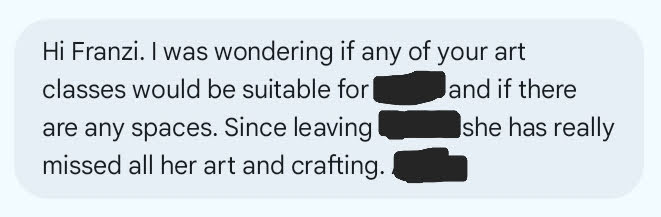
Anyway, as I was going through them, I stumbled upon this one:
I knew this girl, let’s call her Emily, from a preschool I was teaching at a wee while ago.
I remember her vividly.
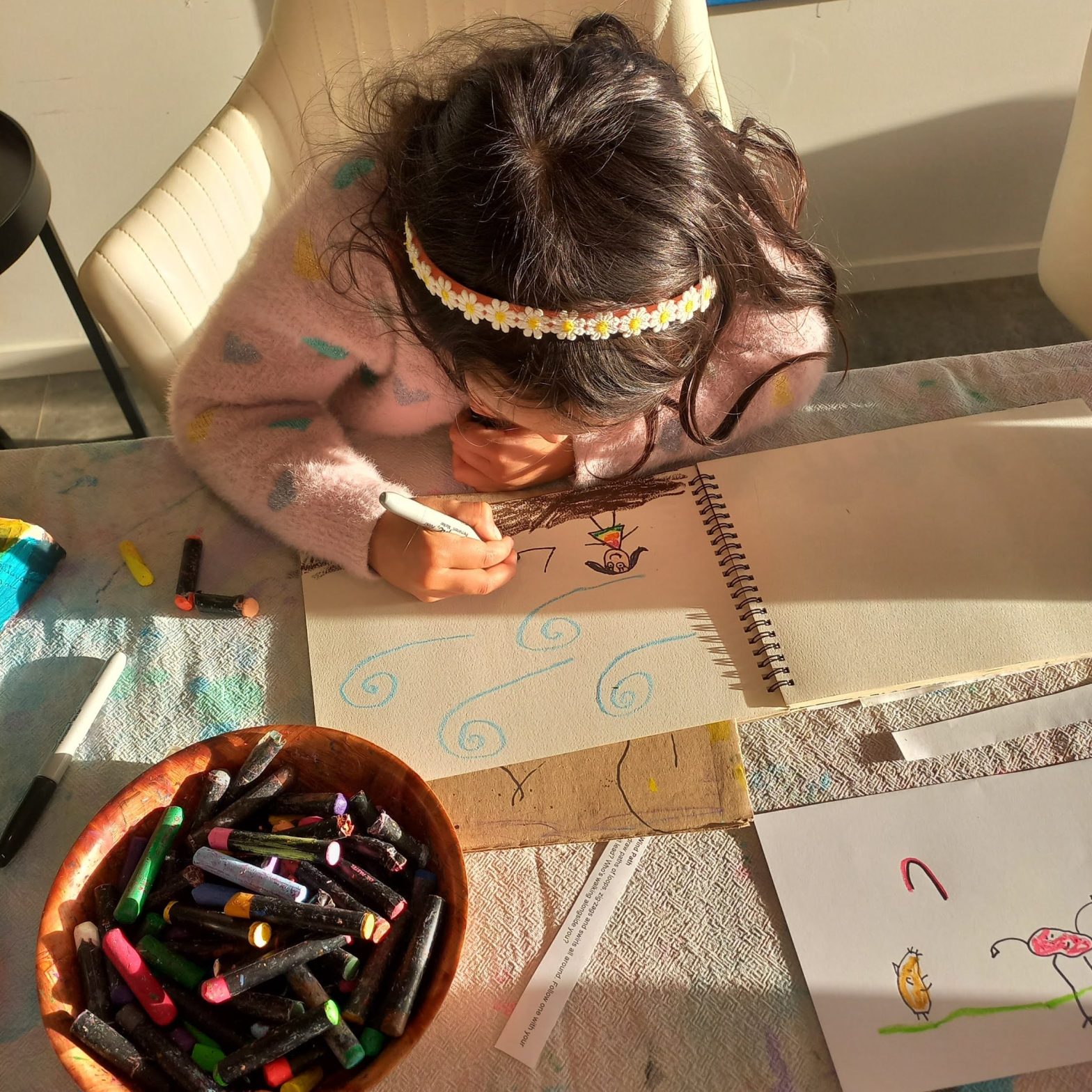
All day every day, Emily and her friends would gather around the art table. Painting, cutting, gluing, drawing, making things. It was her happy place.
When Emily was about to turn 5, she was excited. Like, SO, excited… Because it meant she was starting school. Finally, like the big kids before her.
As the big day arrived, Emily said her goodbyes, smiling widely, ready for this new exciting chapter in her life.
Six months later I got the text above from Emily’s mum. Turns out, there isn’t as much crafting and creating at school.
We are all born creative. But too often school, with its focus on correct answers and standardised outcomes, changes the way children approach the world.
And that shouldn’t be the case.
This isn’t just my opinion. In a well-known longitudinal study, Dr George Land and Dr Beth Jarman used a divergent-thinking test originally developed for NASA. Divergent thinking refers to finding multiple ideas or solutions to one problem. When they tested 1,600 children at ages 4–5, 98% scored in the “creative genius” range. The same children were retested at age 10 and about 30% remained in that range. They were tested again at 15 with about 12% falling in the creative genius range.
They also tested a group of adults separately. Any brave guesses on the “creative genius percentage”? Go on… 👀
The adult proportion drops to roughly 2%. Two percent. Let that sink in.
From this and similar research we can conclude that creativity is not so much learned as it is, sadly, unlearned over time.
This isn’t the individual child’s failing. The numbers are a warning sign about systems and habits that narrow curiosity: rigid expectations, reward structures built around “getting it right”, and environments that favour the perfect product over messy exploration.
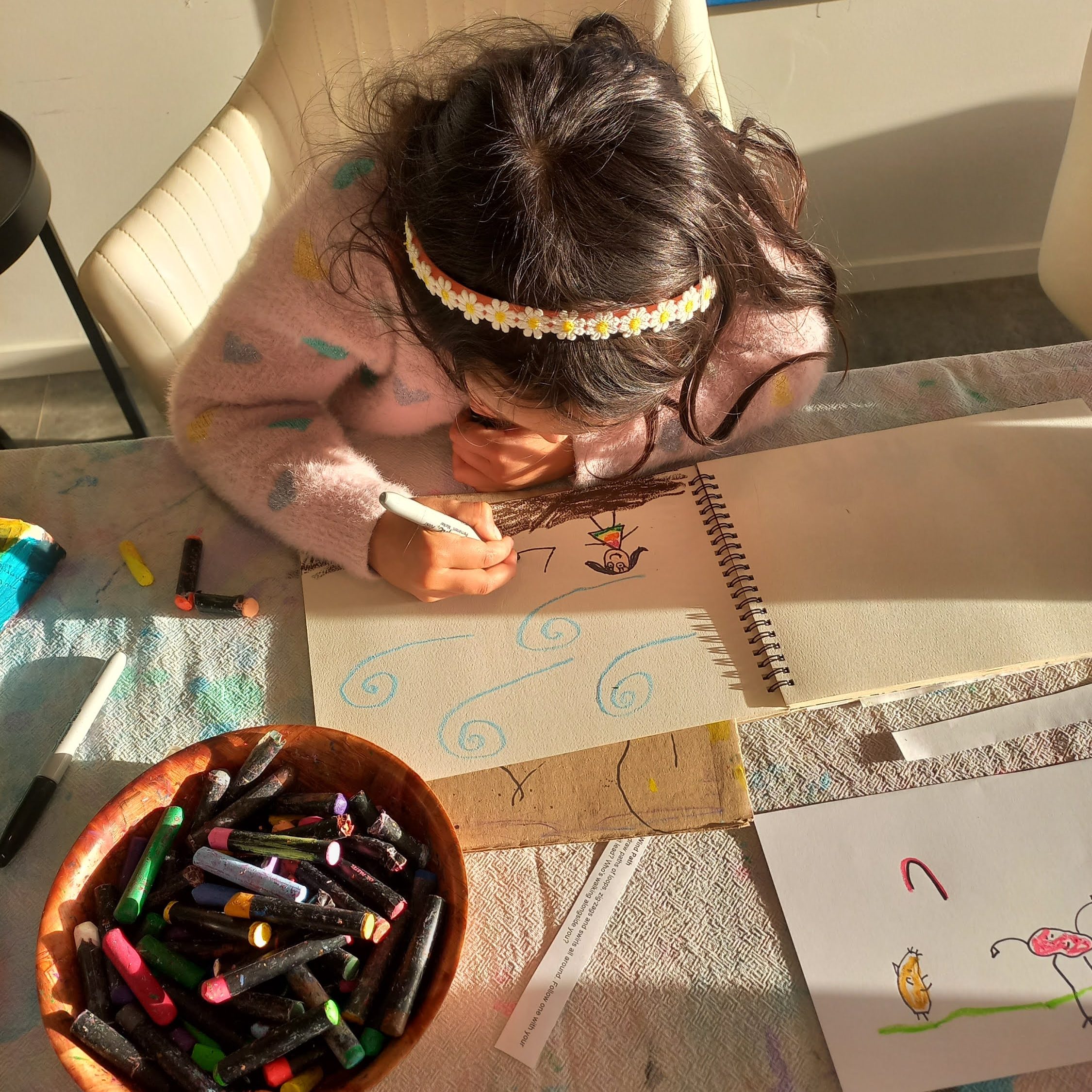
If we want our children to keep their innate creativity, we must protect, provide and celebrate moments of unstructured, playful making.
I want to leave you with 3 x practical, tiny shifts that make a big difference:
1) Offer open-ended materials. Things that can be used in many ways (I have yet to meet a child that doesn’t enjoy transforming a good old cardboard box)
2) Step back & let go. Watch and wonder in curiosity, rather than trying to fix or direct what’s happening. (I know, this is easier said than done sometimes. Keep trying, it’s worth it.)
3) Name the process. Use language that praises effort, persistence and curiosity (e.g. “I love how you tried a new way!” or “I noticed when you got stuck, you kept on trying. Now you found a way that works.”).
These tiny habits interrupt the “unlearning” process and help divergent thinking grow.
Emily missed her art because something in the transition to school narrowed the space where she could play and experiment. But the solution is simple: by inviting small, regular moments of creative (and yes, messy) play and curiosity we give our tamariki (and ourselves) permission to be imperfect, to try, to fail, and to try again.
And with that, happy playing and creating,
Franzi
—
I’m Franzi, a teacher, creative, and a child-at-heart. I’m on a mission to keep children’s (and your) creativity alive. If you enjoyed this post and want to support what I do, pick one of these right now:
Subscribe to the newsletter and get early access to more stories, tips, and creative inspiration.
Leave a Google review for Imagine Play Inspire (your feedback helps families find us!)
Become a Creative Supporter to help keep this content free.
 Imagine Play Inspire