
After a 1:1 process-art session last week, the young creative’s mum and I ended up in a long, lovely chat about staying curious as adults. How do we keep asking questions when we’ve learned “the answer”?
Of course, we haven’t learned everything… but it’s surprisingly easy to stop wondering when we hear a satisfying answer.
Said mum mentioned a quote along the lines of “one should wonder about 30 things each day.”
While I can’t find a reliable source for its origin (apparently ancient Greek philosopher Heraclitus deserves some credit), its sentiment rings true. The real question is: how do we actually keep wondering (and model that for our tamariki) when life is full, schedules are tight, and we’re often expected to have the answers?
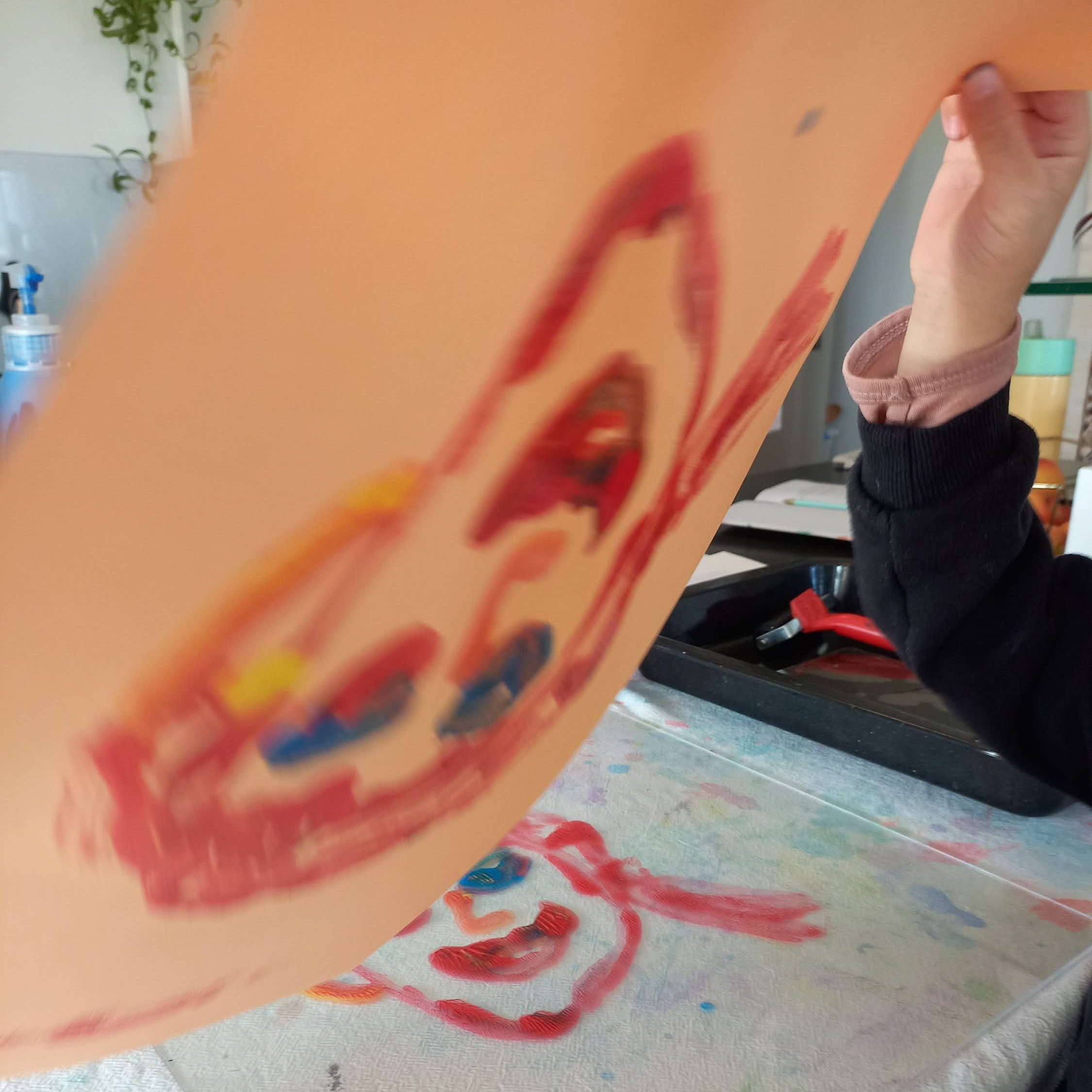
If we want our children to grow up curious, confident and able to think for themselves, we must nurture a sense of wonder. To do that, we need to stay curious ourselves and invite wonder into everyday life — without adding more to our to-do list. Trust me, it’s possible. 🙃
Below are simple, practical habits you can do in 1–10 minutes that help you model curiosity, give your child space to think, and create meaningful connection, even on the busiest of days.
👉🏽 Don’t give all the answers. When a question comes, try: “That’s a great question. I’m wondering about that too. What do you think?”
👉🏽 Mirror the question back. If your child asks “Why…?” reply with “Why do you think that might be?” It invites them to think for themselves and shows you value their thought process and ideas.
👉🏽 Be comfortable with “I don’t know.” Say it out loud, then add “Let’s find out”. It teaches tamariki that not knowing is the start of learning, not a sign of failure or weakness.
👉🏽 Start sentences with “I wonder…” e.g. “I wonder why the tide pulls the sand like that?” or “I wonder who lives under that rock…” Leaving the sentence open initiates guessing, storytelling, and imagination.
Here’s a simple real-life example from a conversation that happened at preschool a year or so ago:
4 y/o: “How did you grow up, Franzi?”
Me: “That’s a great question… Hmm, I’ve been wondering about that myself. How do you think I grew up?”
4 y/o: “I think you had many birthdays and that’s how you grow up. I had a birthday and now I’m 4.”
From that emerged a beautiful conversation around growing up, childhood and what it means to be an adult. Again, without me giving the answers. Instead, the two of us were contemplating these topics together.
Children do not always need our answers. More often than not, they need an invitation to ponder and encouragement to express their own points of view. By giving them the opportunity to wonder, we’re teaching them how to think, how to ask better questions, and how to trust their own ideas… and by doing so, we help them build a strong foundation for lifelong learning.
Does that mean facts don’t matter? No. Facts still matter. But wonder and facts work best together. Curiosity starts the question; facts, experiments and a little research help us test ideas and learn. A quick way to model this is to wonder aloud with your child, then look up or try a tiny experiment together: “I wonder why leaves change colour… Should we look it up or collect a few and compare?” That shows children how to stay curious and how to find reliable answers.
What’s one small thing you’ll wonder about today? Feel free to share, I’d love to see what you’re curious about. 😊
And with that, happy wondering, playing, and creating,
Franzi
—
I’m Franzi, a teacher, creative, and a child-at-heart. I’m on a mission to keep children’s (and your) creativity alive. If you enjoyed this post and want to support what I do, pick one of these right now:
Subscribe to the newsletter and get early access to more stories, tips, and creative inspiration.
Leave a Google review for Imagine Play Inspire (your feedback helps families find us!)
Become a Creative Supporter to help keep this content free.
 Imagine Play Inspire