Last week, we hosted a Tinker Station at Centre City New Plymouth, and it felt like such a special treat. Some of you reading this were there, and I’ve loved being able to chat and (re)connect in person – in between sprints of restocking and tidying materials. 🫠
There were three things from that week that I found particularly interesting:
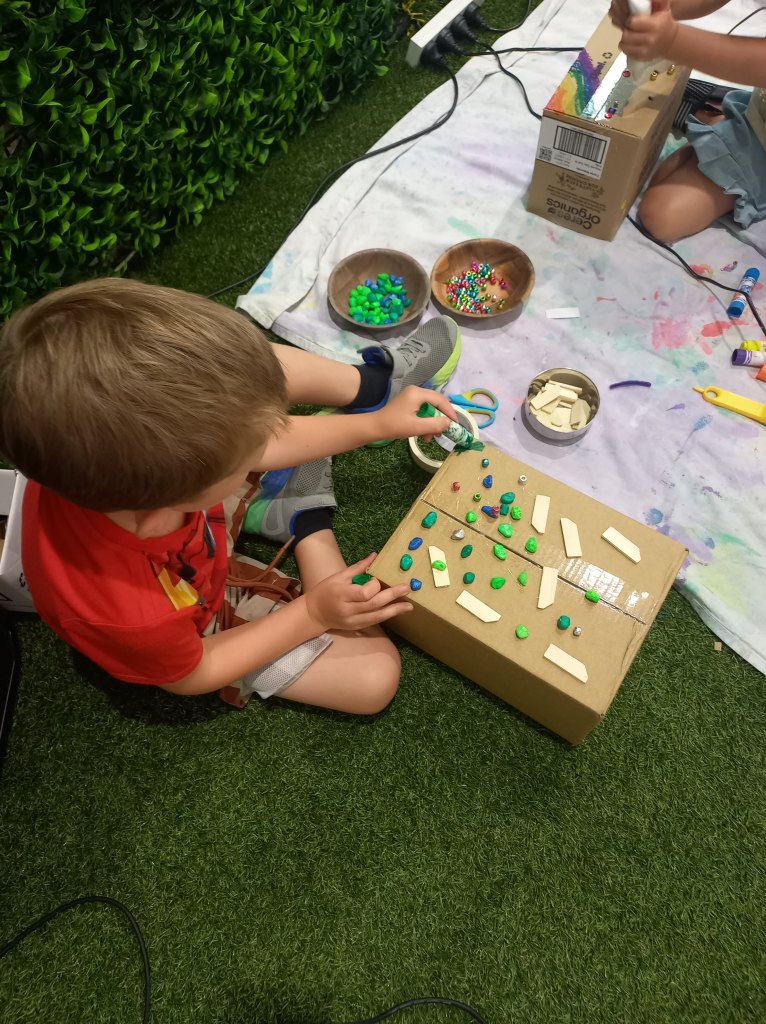
- Although we had similar resources available each morning, every day looked different. And that’s the magic of open-ended art & making… The children came in with their own interests (e.g. robots, Sylvanian Families, cats, helicopters, Minecraft) or followed their own curiosities (e.g. How can I use the cardboard cutter? What happens if I combine this with that?). We didn’t tell them what to do, and instead invited them to literally “make anything you want”. I was amazed after each session what the cardboard boxes had turned into!
- Adults got into it too. I’m not gonna lie… at least one adult got delightfully stuck at a hot-glue station, trying to “help” a child. A grandparent working on a cardboard house with her granddaughter told me: “I’m in my element.” It’s beautiful to see grown-ups rediscovering that playful, hands-on joy.
- The environment matters. A purposeful space, an intentional setup, small group numbers, and children creating alongside each other makes a huge difference. So many times have I heard from parents: “At home this would only last 2 minutes.” The right environment gives ideas time to breathe and grow.
So, what can we take away from this?
- Let them lead! Open-ended materials invite unique ideas each day. The less defined, the better. Think cardboard, paper plates/cups, corks, buttons, paper straws etc.
- Join in sometimes. Adults bring encouragement and playful momentum. A reminder to never underestimate the power of modelling (desired) behaviours. 🙃
- Set the scene. An intentional space helps creativity stick around. Start small, keep it simple. Consistency wins over complexity: you don’t need more stuff, just regular, open invitations to create.
And with that, happy playing and creating,
—
I’m Franzi, a teacher, creative, and a child-at-heart. I’m on a mission to keep children’s (and your) creativity & joy for making alive. If you enjoyed this post and want to support what I do, pick one of these right now:
Subscribe to the newsletter and get early access to more stories, tips, and creative inspiration.
Leave a Google review for Imagine Play Inspire (your feedback helps families find us!)
Become a Creative Supporter to help keep this content free.
 Imagine Play Inspire